In a culture that often equates happiness with success, income, or achievement, many people find themselves asking: Why don’t I feel fulfilled—even when things look good on paper?
This is where Positive Psychology offers a powerful shift in perspective.
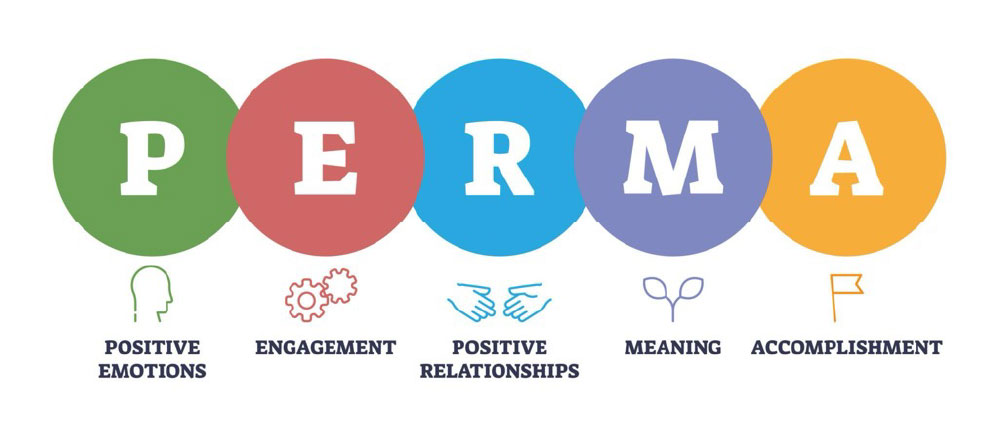
Rather than focusing primarily on what’s wrong, Positive Psychology studies what helps people thrive. One of the most influential frameworks in this field was developed by Martin Seligman, former President of the American Psychological Association, and a pioneer in the science of well-being. His model, PERMA, outlines five measurable elements of human flourishing.
Let’s explore how you can apply PERMA in your life—practically and intentionally.
What Is Positive Psychology?
Positive Psychology is the scientific study of what enables individuals and communities to flourish. It doesn’t ignore suffering. Instead, it balances symptom reduction with strength development.
Research in Positive Psychology draws on neuroscience, behavioral science, and longitudinal studies of happiness to identify patterns that increase life satisfaction, resilience, and emotional well-being.
The PERMA Model Explained
PERMA stands for:
- P – Positive Emotion
- E – Engagement
- R – Relationships
- M – Meaning
- A – Accomplishment
These five components work together to create lasting well-being—not just temporary happiness.
- Positive Emotion
Positive emotion includes feelings such as joy, gratitude, hope, amusement, serenity, and inspiration.
Neuroscience shows that positive emotions broaden our thinking and increase cognitive flexibility (the “broaden-and-build” theory). They also reduce stress hormones and strengthen immune function.
Practical Applications:
- Keep a daily gratitude journal (3 good things per day).
- Practice savoring—pause and fully experience positive moments.
- Limit chronic negative input (news, social media overload).
Positive emotion isn’t toxic positivity—it’s intentional emotional nutrition.
- Engagement
Engagement is about being fully absorbed in meaningful activity—what many call “flow.” When you are in flow, you lose track of time because you are deeply immersed.
Flow research shows that engagement increases intrinsic motivation and long-term life satisfaction.
Practical Applications:
- Identify strengths you naturally enjoy using.
- Schedule distraction-free blocks of work or creativity.
- Replace passive consumption with active participation.
Engagement is less about doing more—and more about being fully present in what you’re doing.
- Relationships
Strong, supportive relationships are the single greatest predictor of long-term happiness and longevity. Connection regulates our nervous system, lowers inflammation, and increases emotional resilience.
Humans are neurologically wired for belonging.
Practical Applications:
- Invest in quality conversations.
- Express appreciation directly and specifically.
- Repair small ruptures quickly.
In my clinical work, I consistently see that relational health is deeply tied to emotional health.
- Meaning
Meaning comes from belonging to and serving something larger than yourself—faith, mission, family, service, or contribution.
Research consistently shows that people who live with a clear sense of purpose experience greater resilience during adversity.
Practical Applications:
- Clarify your personal values.
- Engage in service or mentorship.
- Reflect on how your daily work serves others.
Meaning sustains us when emotions fluctuate.
- Accomplishment
Accomplishment involves pursuing goals, mastering skills, and experiencing progress.
Achievement builds confidence, strengthens neural pathways of motivation, and reinforces identity.
Practical Applications:
- Set goals that align with your values.
- Break goals into measurable steps.
- Celebrate progress—not just outcomes.
Accomplishment without meaning leads to burnout. But accomplishment aligned with purpose builds fulfillment.
Why PERMA Matters in Clinical Practice
In counseling, we often focus on reducing anxiety, depression, addiction behaviors, or trauma responses. That work is essential.
But symptom reduction alone does not equal flourishing.
PERMA allows us to:
- Build protective factors
- Strengthen identity
- Increase resilience
- Move from surviving to thriving
For individuals in recovery, couples rebuilding connection, veterans healing from trauma, or professionals facing burnout, PERMA provides a roadmap toward sustainable well-being.
A Weekly PERMA Check-In
Consider asking yourself each week:
- What brought me joy this week?
- When was I most engaged?
- How did I invest in my relationships?
- What gave my life meaning?
- What progress did I make?
Flourishing is intentional. It is cultivated.
Final Thought
Happiness is not a destination. It’s the byproduct of living well across multiple dimensions.
The PERMA model reminds us that a meaningful life is built through emotional health, deep engagement, strong connection, purposeful living, and measurable growth.
If you’re interested in building a PERMA-based approach in your own life—or within your family, organization, or recovery journey—I’d be honored to help guide you.
Phone: 949-303-8264
Email: randy@randymoraitis.com
Website: www.randymoraitis.com
Facebook: https://www.facebook.com/RandyMoraitisCoach/
Twitter: @rmoraitis
About Dr. Randy Moraitis
Dr. Randy Moraitis is a Board Certified Positive Neuro Psychologist, State Certified Addiction Counselor, Certified Intervention Professional, Board Certified Pastoral Counselor, and Certified Professional Coach who has helped thousands of individuals and families with mental health, addiction, and wellness issues for over 20 years. Dr. Moraitis’s clients include therapists, physicians, dentists, attorneys, CEOs, and people from all walks of life. He is the leader of the nationally renowned recovery program Lifelines and is the president and founder of the nonprofit CarePossible, and has won numerous awards for his work in mental healthcare.
Randy holds a PhD in Positive Neuropsychology and is a Board-Certified Positive Neuropsychologist, Certified Intervention Professional (CIP), and CADC II. He is highly regarded for his work helping individuals and families navigate addiction, mental health challenges, and personal transformation through counseling, coaching, and professional interventions.
A multi-award-winning Board-Certified Pastoral Counselor and ordained minister, Randy brings a unique, integrated approach to healing and growth. He also holds six professional coaching certifications and specializes in executive, life, wellness, and recovery coaching.
Randy’s educational background includes a master’s degree emphasizing theology and counseling, a bachelor’s degree in management and leadership, and a certificate in health and fitness with an emphasis in exercise physiology and sports psychology from UC Irvine.
For more than 25 years, Randy has guided individuals, families, and organizations toward mental, emotional, physical, and spiritual well-being throughout Orange County. He maintains a private practice office in Laguna Niguel, California, and sees clients and patients both in person and virtually.