The Neuroscience of Hope
Hope is far more powerful than most people realize.
In my work with individuals struggling with anxiety, addiction, trauma, depression, burnout, and relationship challenges, I have seen one truth repeatedly confirmed: when people lose hope, they often lose motivation, resilience, and sometimes even the belief that change is possible. But when hope returns, something begins to shift—not only emotionally, but neurologically. That’s why I’ve always loved the acronym for hope: Hold On Pain Ends.
Modern neuroscience is now confirming what many counselors, recovery professionals, and faith leaders have observed for generations: hope changes the brain.
Hope Is More Than Positive Thinking
Many people think hope is simply optimism or wishful thinking. It is not.
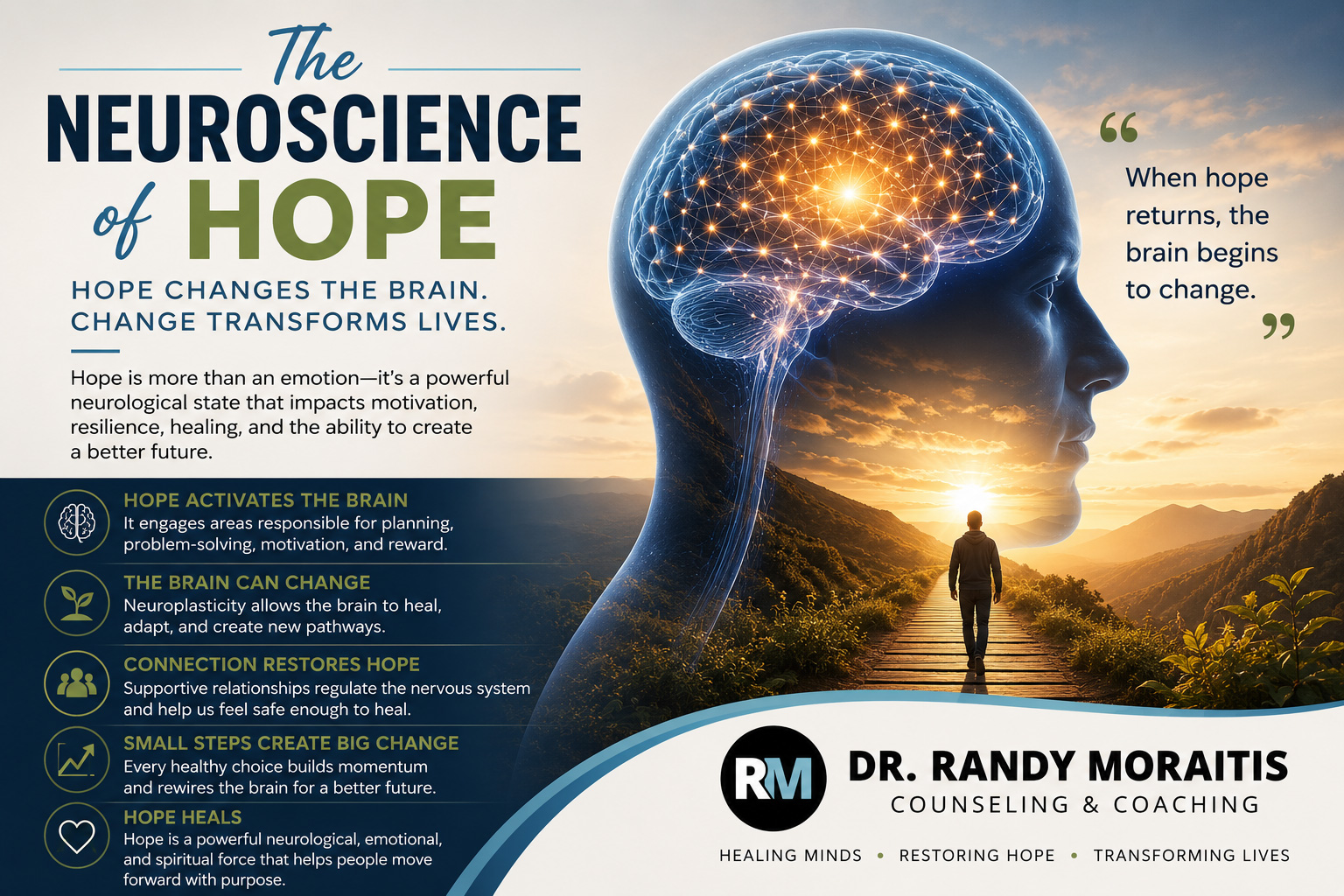
Hope is actually a psychological and neurological state that directly impacts motivation, emotional regulation, stress response, and decision-making. Research in neuroscience and positive psychology suggests that hopeful thinking activates areas of the brain associated with planning, reward, problem-solving, and future vision.
In simple terms, hope helps the brain move from survival mode into growth mode.
When people feel hopeless, the brain often becomes trapped in fear, emotional shutdown, helplessness, or destructive coping behaviors. But when hope begins to return, people often regain the ability to think clearly, take healthy action, and envision a better future.
The Brain Can Change
One of the most encouraging discoveries in neuroscience is neuroplasticity—the brain’s ability to reorganize and form new neural pathways throughout life.
This means people are not permanently stuck.
Individuals who have experienced trauma, addiction, anxiety, depression, or years of negative thinking often begin to believe they can never change. But neuroscience tells us otherwise. The brain can heal. Patterns can change. Emotional regulation can improve. Recovery is possible.
Hope is often the spark that begins this process.
When someone starts believing healing is possible, the brain begins functioning differently. Motivation increases. The nervous system becomes calmer. The prefrontal cortex—the area responsible for reasoning, planning, emotional regulation, and wise decision-making—begins operating more effectively.
Hope literally helps restore higher-level brain functioning.
Chronic Stress and Hopelessness Affect the Brain
On the other hand, prolonged hopelessness and chronic stress can negatively impact both the brain and body.
When people live in constant stress, fear, shame, or emotional overwhelm, stress hormones like cortisol remain elevated for extended periods of time. This can contribute to anxiety, irritability, emotional exhaustion, sleep problems, brain fog, depression, and addictive behaviors.
Over time, the brain can become conditioned to expect failure, danger, disappointment, or rejection. Many people become stuck in negative neurological loops that reinforce fear and hopelessness.
This is one reason why restoring hope is so important in counseling, recovery, and mental health treatment. Hope is not merely motivational—it is therapeutic.
Human Connection Helps Restore Hope
Another important part of the neuroscience of hope is healthy connection.
Supportive relationships help regulate the nervous system. Counseling, recovery groups, healthy friendships, family support, mentorship, and faith communities can all help people feel emotionally safe enough to heal and grow.
Isolation often intensifies hopelessness, while connection helps restore emotional resilience.
In many cases, people borrow hope from others before they fully rediscover it themselves.
Small Steps Create Big Changes
One of the most powerful truths I have witnessed over the years is that hope often begins very small.
Sometimes it starts with:
- One honest conversation
- One counseling session
- One healthy boundary
- One day sober
- One act of courage
- One supportive relationship
- One decision to keep going
Small victories matter because the brain responds powerfully to progress. Over time, consistent healthy choices create new neural pathways and healthier patterns of thinking and behavior.
This is how transformation happens.
Final Thoughts
I have seen individuals recover from severe addiction, trauma, anxiety, depression, and overwhelming life circumstances. In nearly every case, healing began when hope returned.
Hope is not weakness.
Hope is not denial.
Hope is not pretending life is easy.
Hope is a powerful neurological, emotional, and spiritual force that helps people endure hardship, heal from adversity, and move forward with purpose.
And from a neuroscience perspective, hope may be one of the most powerful catalysts for change that we possess.
About Dr. Randy Moraitis
Dr. Randy Moraitis holds a PhD in Positive Neuropsychology and is a Board-Certified Positive Neuropsychologist, Certified Intervention Professional (CIP), and CADC II. He is also a Board-Certified Pastoral Counselor, and Certified Professional Coach who has helped thousands of individuals and families with mental health, addiction, and wellness issues for over 25 years. Dr. Moraitis’s clients include therapists, physicians, dentists, attorneys, CEOs, and people from all walks of life. He is the leader of the nationally renowned recovery program Lifelines, the CEO and Founder of the nonprofit CarePossible, and has won numerous awards for his work in mental healthcare.
Dr. Randy is highly regarded for his work helping individuals and families navigate addiction, mental health challenges, and personal transformation through counseling, coaching, and professional interventions.
Randy also holds a master’s degree in theology and counseling, a bachelor’s degree in management and leadership, a graduate certificate in exercise physiology and sports psychology from UC Irvine, and numerous certifications in counseling and coaching.
Dr. Randy has guided individuals, families, and organizations toward mental, emotional, physical, and spiritual well-being throughout Orange County. He maintains a private practice office in Laguna Niguel, California, and sees clients and patients both in person and virtually.